The unbeatable 1950s desk trick
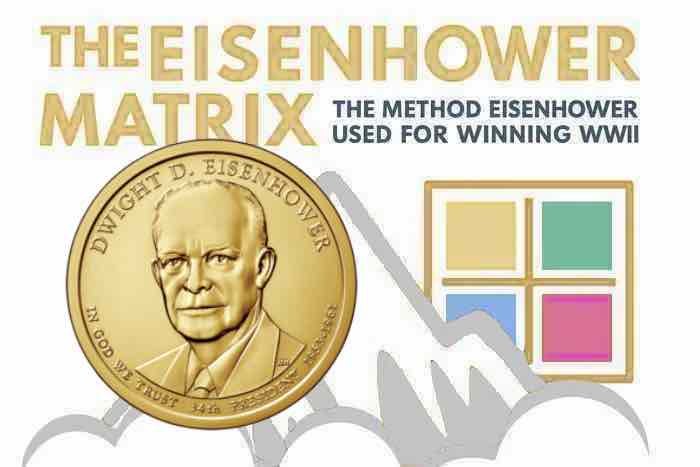
In August 1954, speaking at Northwestern University, Dwight D. Eisenhower reflected on the nature of challenges and how to master them: there were two kinds of problems, the urgent and the important.
The urgent were not automatically important, and the important were not automatically urgent. Considering and providing for this distinction made all the difference for mastering life’s challenges.
Eisenhower never made much of his own principles of order. As President, he had plenty else to do. It was Stephen Covey who picked the idea up again in his bestseller The 7 Habits of Highly Effective People and made it known worldwide as the Eisenhower matrix.
So why listen to Eisenhower on this? Because his ideas shaped how history turned out. By 1944 he was coordinating the movements of several million people across two continents — supply chains, weather windows, competing generals, three governments with different ideas about all of it. When a man operating at that scale says out loud that urgency and importance are different animals, it is probably not a throwaway remark.
The grid, concisely explained
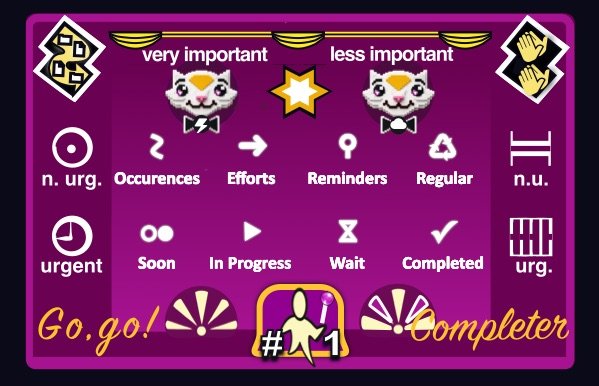
Two questions, crossed against each other.
Is it important? Does it move something you actually care about. Is it urgent? Does it demand attention right now. Cross them and you get four fields, and every project you have sits in one of them.
Genuine crises and real deadlines. This field should be small. When it is permanently full, something upstream is broken.
Where everything that changes your situation lives. Nothing here ever shouts, which is exactly why it starves.
Most of what interrupts you. Other people’s deadlines wearing your name badge.
The field nobody wants to look at, because looking at it honestly costs something.
The lesson usually drawn from this is spend more time in the second field. True, and the least interesting thing about it.
The part almost everyone skips
The useful thing was never the sorting. It was that the four fields could be seen at once, without effort, without deciding to look.
A method you have to consult is a method you will abandon in your third busy week. Not because you lack discipline — because consulting it is one more decision, and decisions are exactly what run out when things get heavy. A method that is simply in front of you does not ask for anything, so it survives.
Why the grid went missing from your screen — till now
Eisenhower’s problems were physical. Memos, maps, folders — objects that took up room on a desk. Sorting one meant picking it up and putting it somewhere. The plan and the work were the same material in the same place.
Yours are not. Your projects live in folders, across two or three clouds, in a mail thread, in a chat you have not opened since Tuesday, and mostly in your head. You can still sort them into quadrants. But the sorting now happens in one place and the work happens somewhere else entirely, and that gap is where things quietly disappear.
As exciting new practices take hold, good ideas can be left behind.
Why apps do not close the gap
Every tool becomes another place to go. Another window, another login, another set of notifications, another thing to keep current. You now hold two things — your work, and a parallel description of your work — and keeping the description honest becomes a job in its own right.
Most people know the exact moment it ends. You open the board after a fortnight away, find fourteen overdue items that stopped mattering ten days ago, feel a small flicker of something unpleasant, and close the tab.
That is not a failure of character. It is a mismatch of design. Try the principle before you spend anything
So how can you reclaim effortless focus?
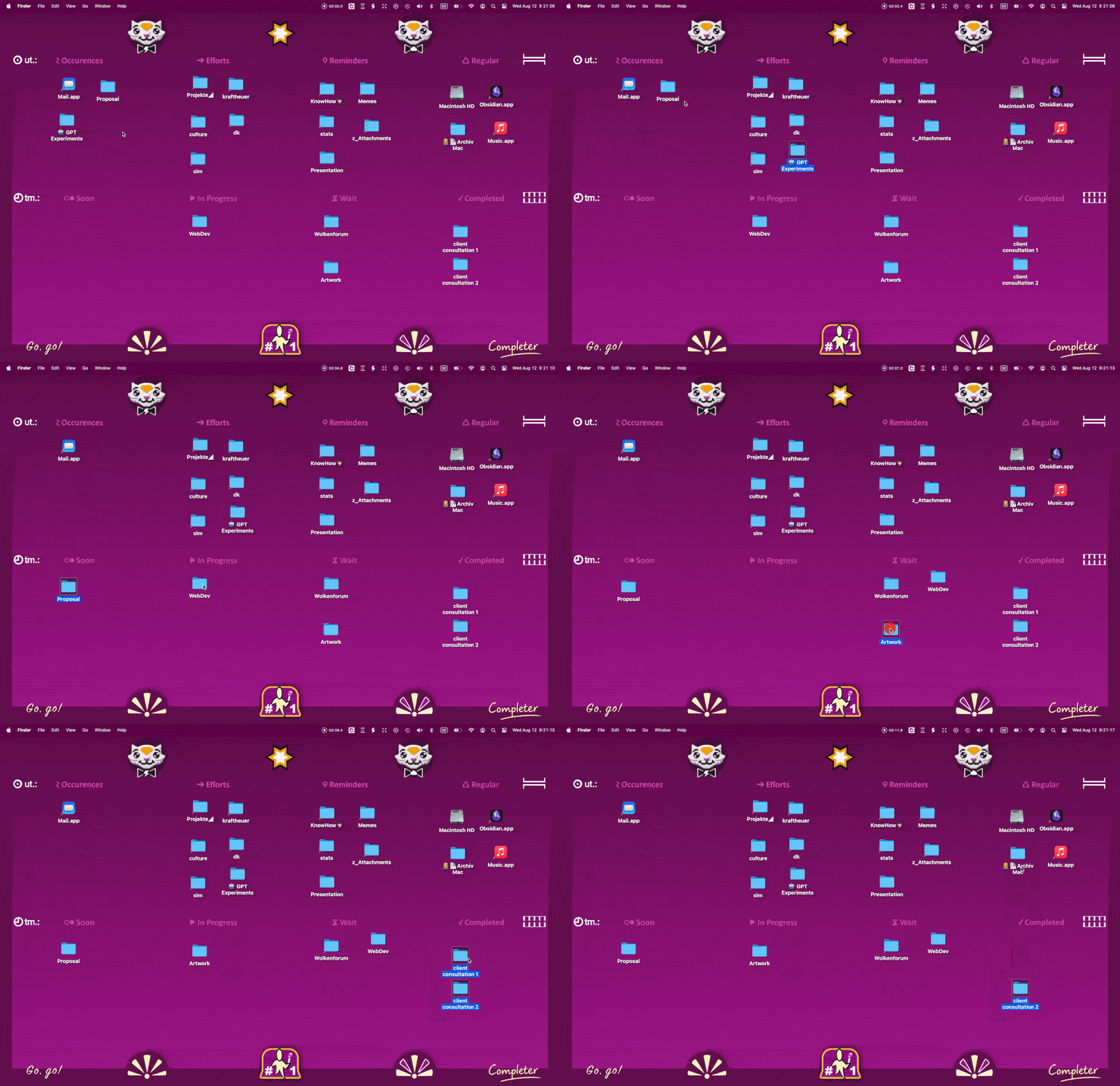
You are looking at it. The desktop — the actual screen behind your windows — is the one place you pass through dozens of times a day, that is always there, and that almost everyone treats as a junk drawer.
That is the idea we put back on your screen. It is called the Completer, and it is a desktop background with the fields drawn into it: Eisenhower’s two axes, crossed with the Kanban columns Toyota used to make the same principle work for flow rather than triage — Soon, In Progress, Wait, Completed.
You set it as your wallpaper. Then you drag your real files and folders into the field where each one belongs. Not copies, not links into a database — the actual things you work on.
Nothing is running. No account, no sync, no connection required. Move a file into the In Progress field and it is in progress, because the position on the screen is the record. Same as the paper. Nothing to keep current, because there is no second description to keep honest.
Three reasons it just works
The board sits behind your windows permanently. There is nothing to remember to open, which means there is nothing to forget to open.
Position carries meaning on its own. A file sitting in the upper-left field is telling you something before you have read a single word.
The file is one double-click from where you planned it. Nothing sits between deciding and starting.
One-time purchase, $49.99 · macOS & Windows · No account, works offline
The four editions differ in mood, not function — the same fields, drawn in a different temperament, because the thing is going to sit behind your work all day and that turns out to matter.
It is a background image with a good idea drawn on it. That is the honest description, and we would rather give it than a better-sounding one. Whether it is worth twenty-five dollars depends entirely on whether you recognized yourself somewhere in the last few minutes of reading.
